

How it started?
Lumio began as my final semester M.Tech dissertation project, exploring how empathy can shape inclusive digital learning experiences. The project stemmed from a simple yet powerful belief - that learning should feel accessible and welcoming to every mind.
Through this, Lumio was envisioned as a platform that bridges usability, accessibility and human-centered interaction for neurodiverse learners.
User Research
The research phase focused on understanding how learners interact with online education platforms and identifying common usability challenges. By analyzing existing e-learning systems and user behavior patterns, several insights were gathered to guide the design direction.
Key Findings
-
Complex Navigation
-
Accessibility Limitations
-
Cognitive Overload
-
Lack of Personalization
-
Low Engagement
Insights
The analysis highlighted the need for clean, inclusive, and flexible interface. Lumio's design was guided by principles of clarity, accessibility and personalization, ensuring that every learner could interact comfortably and confidently.
In addition, a study on neurodiverse learners ( including those with ADHD, dyslexia and other learning differences) was initiated as part of my M.Tech dissertation to explore how interface design impacts focus, comprehension, and comfort. This research is currently in progress and will contribute to a research paper on "Human-centered UI/UX Design for Inclusive Educational Interfaces supporting neurodiverse Learners" through Lumio's Design.
Designing with empathy
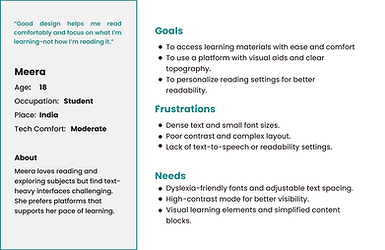
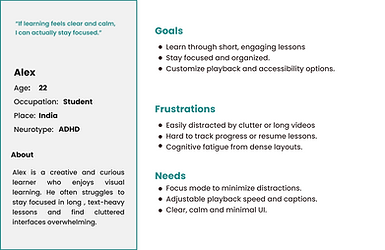
Focused on understanding the cognitive and physical challenges of diverse learners, including those with ADHD (Attention Defict Hyperactivity Disorder) and Dyslexia. Conducted research on user physiology and conducted discussion with a psychologist to gain deeper insights into attention, perception, and sensory processing. These learnings guided Lumio's inclusive design-prioritizing clarity, focus and accessibility in every interaction.
Problem Statement
Many online learning platforms lack accessibility, personalization and intuitive navigation. Lumio was designed to solve these problems by creating a user-friendly experience for diverse learners.
User Persona
.png)
.png)
Ideation & Brainstorming

During this phase, I mapped out the key accessibility features, cognitive support strategies and interaction guidelines.
Focused on visual, auditory, and cognitive accessibility, user settings, and navigation clarity, while also defining layout and flow considerations for the platform. This helped to generate inclusive design ideas that guided the wireframes and high-fidelity designs.
Solution
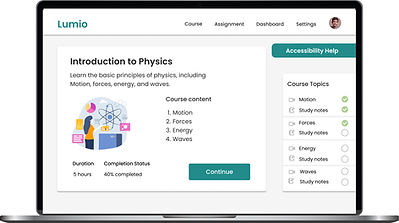
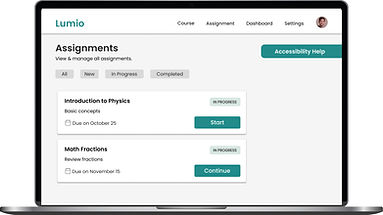
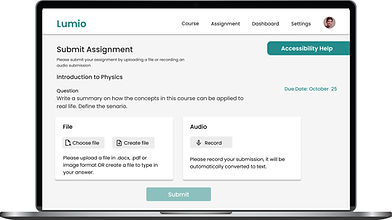
Designed a clean, intuitive interface from scratch, with personalized dashboards, accessible courses and assignment pages, and flexible settings to support all users.


A quick-access panel for essential accessibility features-allowing users to customize the interface for comfortable, distraction-free learning
Accessibility Help
Sketches & Wireframes
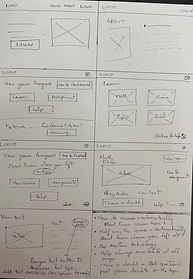
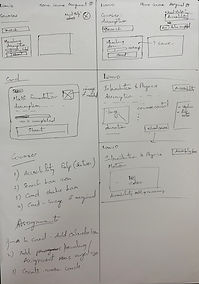
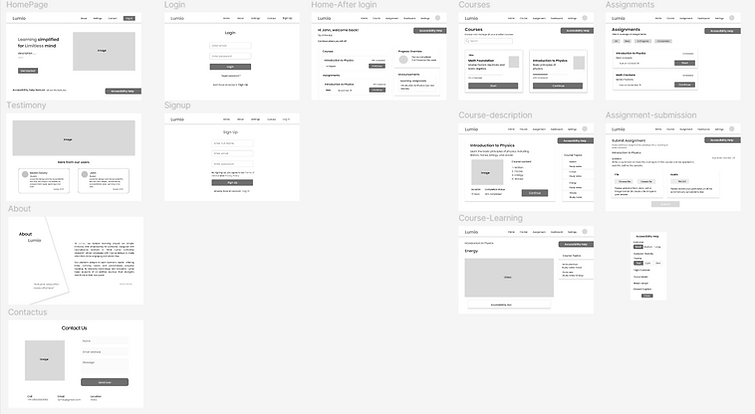
Initial sketches captured the core structure and navigation flow of Lumio. These evolved into low-fidelity wireframes focusing on clarity, accessibility and a simple user journey laying the groundwork for the final design.


Style guidelines
01Fonts

02Colors
Primary Color
#238CBA
Secondary Color
#615E58
Text Color
#2B2B2B
BackgroundColor
#F5F5F5
BackgroundColor
#FFFFFF
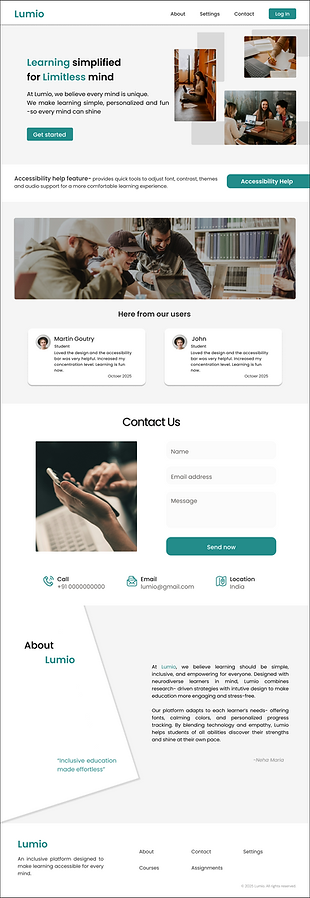
Final Design
Checkout this Figma Link
.png)
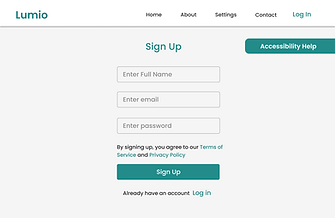
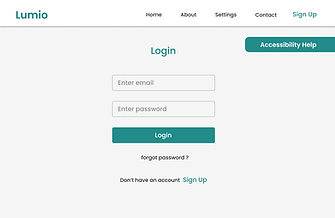
Home Page and Signup/Login pages
Selecting course and start learning
.jpg)
.jpg)
.jpg)
Course Assignments
.jpg)
.jpg)
Settings
.png)
User Testing
To evaluate usability and accessibility, early testing included concept walkthroughs, moderated usability testing. Participants explored the prototype and provided feedback on navigation, readability, and design flow.
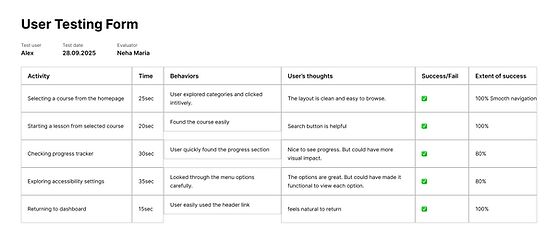
Overall usability success rate: 94%
Users found navigation simple, visual feedback clear, and engaging, with minor adjustments needed.
Key takeaways
Designing Lumio was an opportunity to create a learning platform that values inclusivity, clarity, and accessibility at its core. Through a structured design process-rooted in empathy, ideation, design and testing-the project evolved into an intuitive experience that supports diverse learning needs.
The final design reflects how thoughtful UI/UX decisions can remove barriers, encourage engagement, and make digital learning more human-centered. Lumio stands as a step towards designing platforms that don't just inform but empower every learner to thrive.